
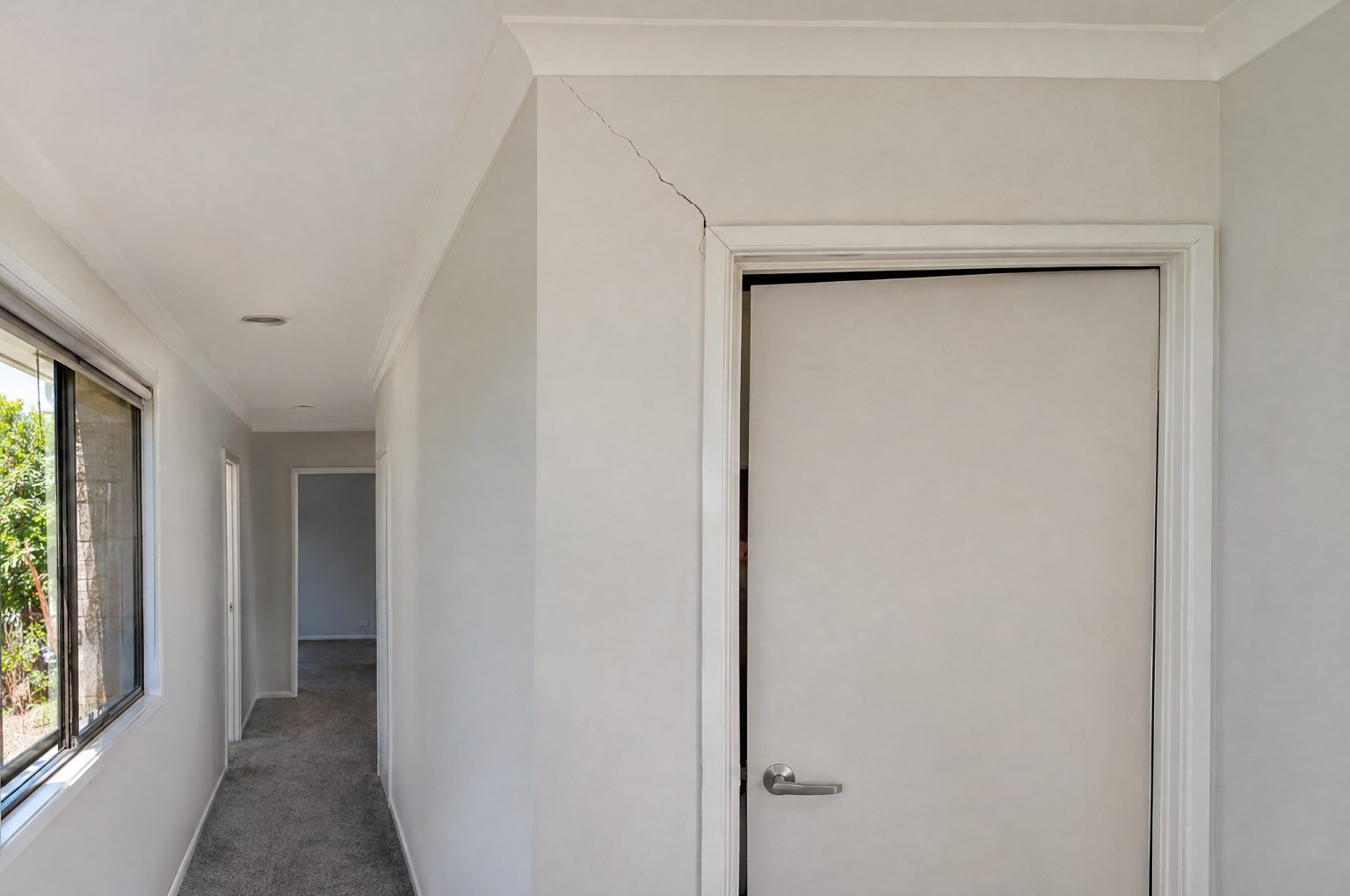
Slab heave is upward movement of a concrete slab caused by clay soil beneath it swelling as it gets wetter. On Melbourne's reactive clays, the most common triggers are leaking pipes, poor site drainage and water collecting against the house. The result can be cracked walls, sticking doors and uneven floors.
Heave is often confused with settlement, and the fix depends on telling them apart. This guide explains how heave happens, what causes it, the signs to look for, and how it is investigated, repaired and prevented.
Reactive clay changes volume with moisture: it swells when wet and shrinks when dry. A slab on that clay moves with it. Some seasonal movement is normal and allowed for in design under AS 2870. Slab heave describes movement beyond that allowance, usually because the soil under part of the slab has become much wetter than the rest.
Heave usually takes one of two shapes.
| Type | What Happens | Common Cause |
|---|---|---|
| Edge heave | The slab edges rise relative to the centre | Wetting around the perimeter: poor drainage, garden watering, ponding water |
| Centre heave (doming) | The middle of the slab rises relative to the edges | Moisture building up under the slab, often from a leaking pipe, or edges drying out |
The opposite problem, edge settlement, happens when the perimeter dries and shrinks. It can produce similar cracking, which is why diagnosis matters.
Most heave starts with water reaching clay that was drier when the slab was built.
A slow leak from a sewer, stormwater or water supply pipe can wet the clay under a slab for months before anyone notices. Leaks under the slab are a classic cause of centre heave.
Ground that slopes towards the house, blocked or missing stormwater connections, and downpipes that discharge onto the ground all put water against the slab edge.
Garden beds built against the slab and heavily watered lawns keep the perimeter wet. Paving that traps water against the house does the same.
Trees dry clay as they draw water. Removing a large tree near the house can let the clay rewet and swell over several years.
A long drought followed by heavy rain can produce large movement. A paper published by the Australian Geomechanics Society examined footing failures on highly reactive sites in Melbourne's western suburbs.
An incorrect site classification, an under-designed slab, or plumbing trenches backfilled with permeable material can all let movement exceed what the slab was built for.
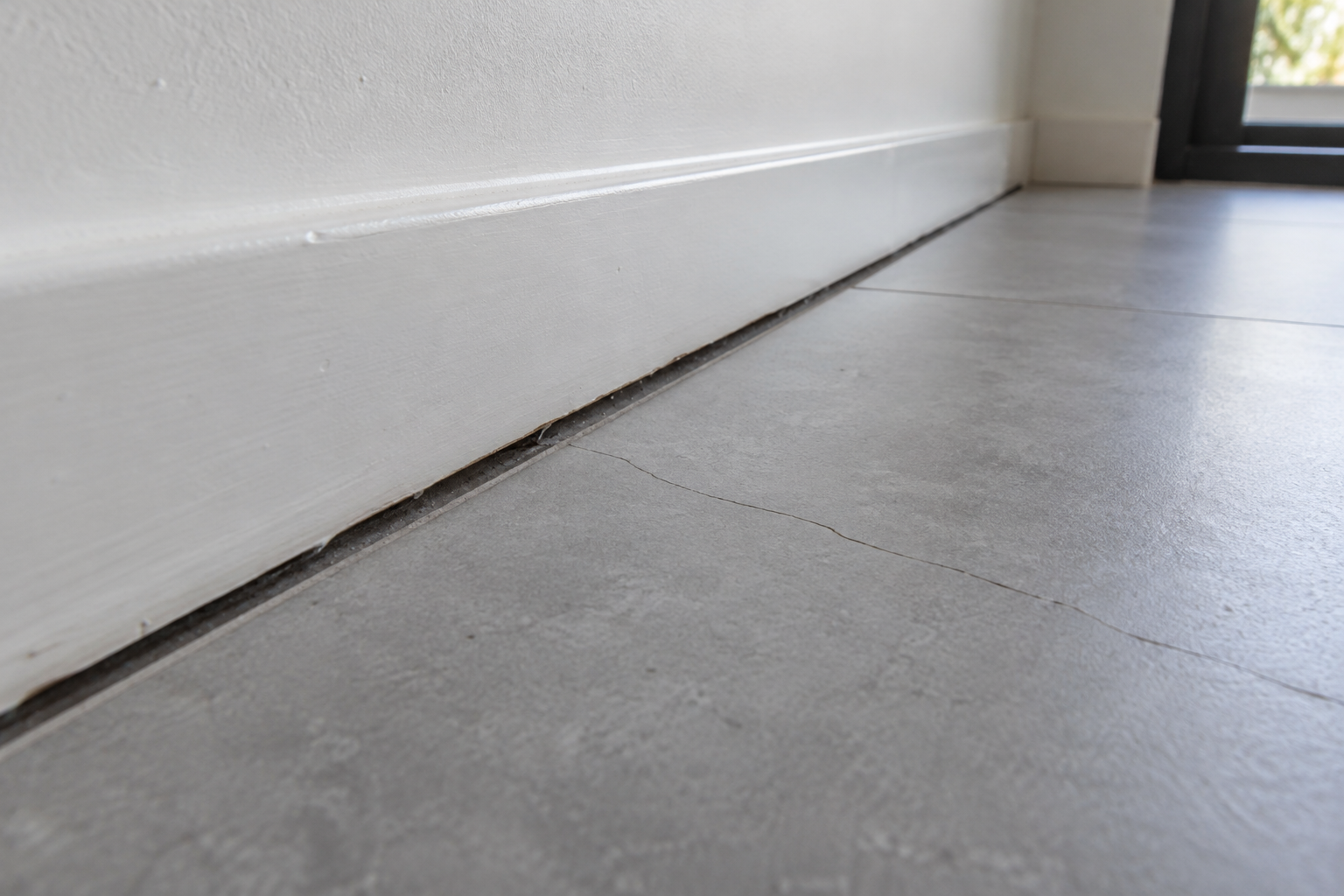
Early signs are often small and easy to dismiss.
Some minor cracking is normal in houses on reactive clay. Our guide to acceptable cracks in a concrete slab explains what is usually cosmetic.
Fixing the symptoms before finding the cause only lets the damage return. A proper investigation runs in this order.
The first repair is always the water source: fix the leak, correct the drainage, or move garden beds and watering away from the slab. Clay can take a long time to dry back, so engineers often recommend monitoring before structural repairs.
Depending on the engineer's findings, further work can include:
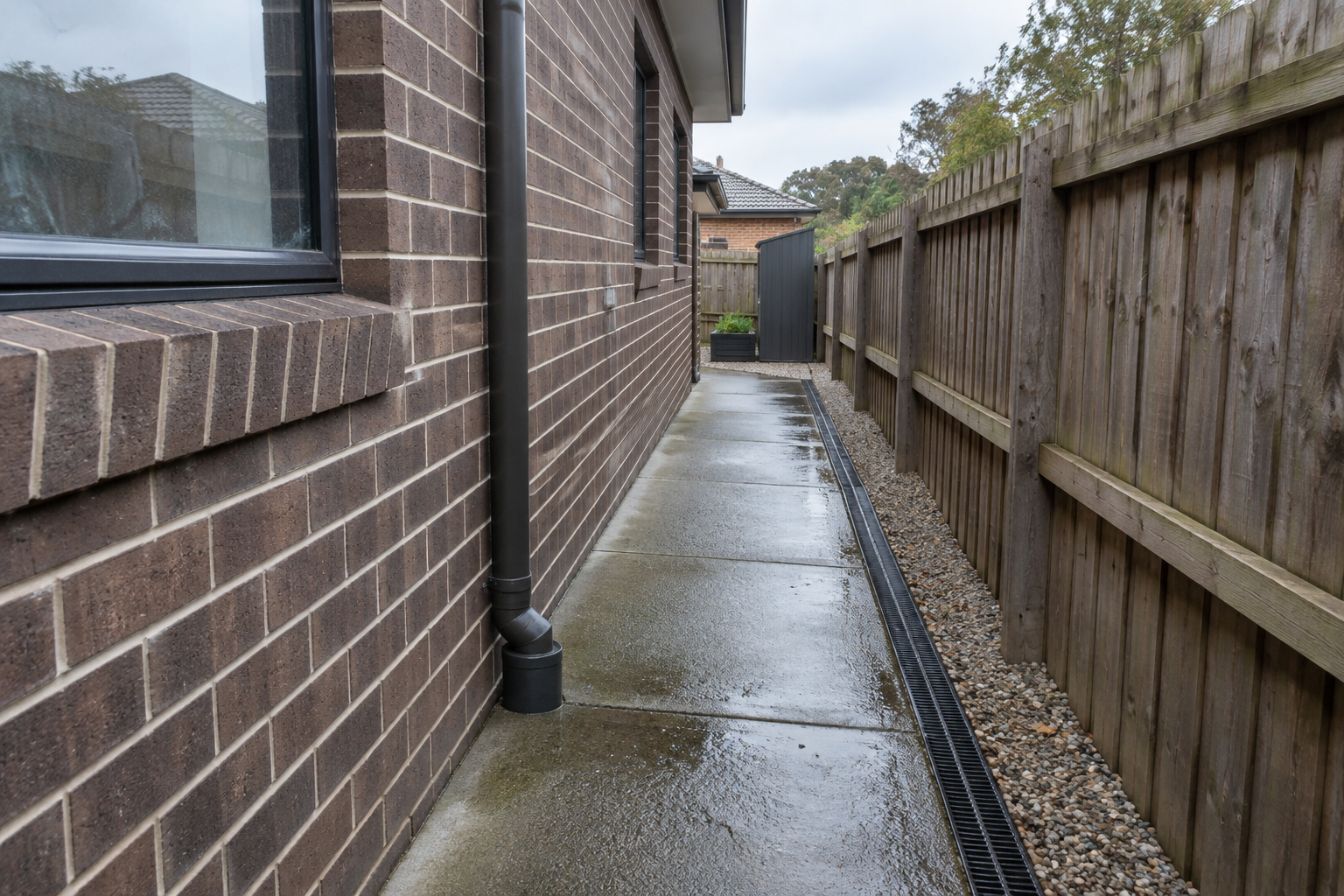
Prevention starts before the slab is poured and continues for the life of the house.
A current site classification report and a slab designed to it are the foundation of everything else. Our guide to concrete slab footings explains how the design responds to the class.
Plumbing trenches that run under or through the slab edge need careful backfill so they do not become channels for water. Guidance in the plumbing standard, AS 3500.2, now covers installing drainage pipes in reactive soils. The ground around the slab should be shaped to drain away from the house before handover.
The CSIRO homeowner's guide to foundation maintenance and footing performance sets out the habits that matter most:
It depends on the policy and the cause. Many policies exclude gradual ground movement but may cover sudden damage, such as a burst pipe. Check your policy wording and speak to your insurer before starting repairs.
It can appear within months of a leak starting or a wet season following a drought, or develop slowly over years as clay rewets after trees are removed. Movement often follows the seasons, so cracks may open and close.
In most cases, yes, once the moisture source is found and controlled. Structural repairs are only reliable after the ground has stabilised, which is why engineers often monitor movement first.
Heave is upward movement as clay swells. Settlement is downward movement as soil shrinks, compresses or washes away. They can cause similar cracks, but the repairs are different, so a level survey and engineer's assessment are needed to tell them apart.
Any house on reactive clay can be affected if water gets under or around the slab. New houses are designed for normal seasonal movement under AS 2870, but leaks, poor drainage and landscaping can still push movement beyond the design allowance.
Slab heave is a water problem before it is a concrete problem. Find the source, control the moisture, then repair the structure once it has settled down.
Urban Pour builds concrete slabs across Melbourne to the engineer's design for each site class. Contact Urban Pour to discuss your slab or footing work.
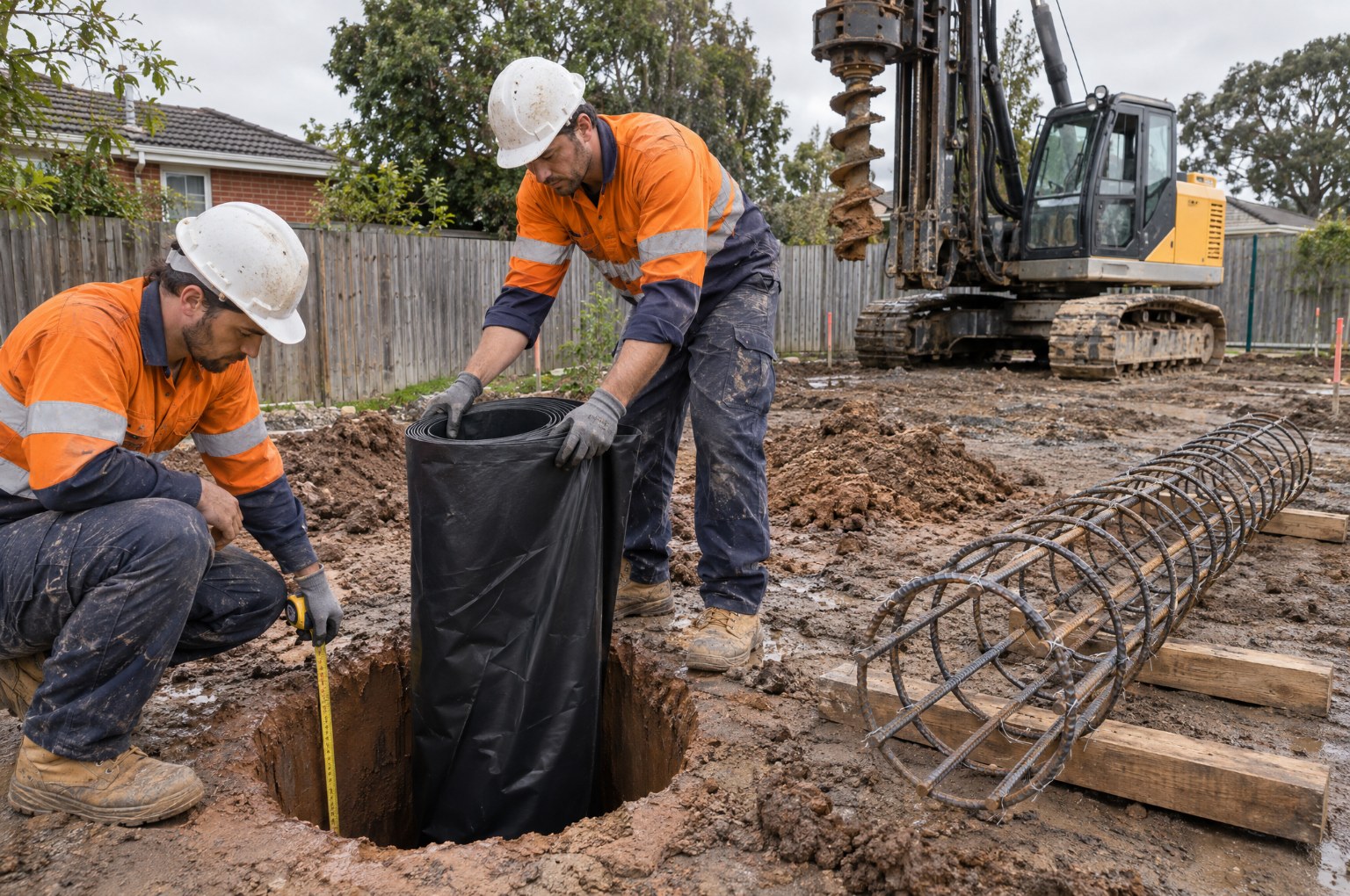
What pile debonding is, why piers in reactive clay or settling fill need it, and how sleeves and coatings are installed.
See moreWhat causes slab heave on Melbourne's reactive clay, the early signs to watch for, and how to prevent and repair it.
See more
What each AS 2870 site class means, how a soil test sets the class, and how it changes your slab and footings.
See more