
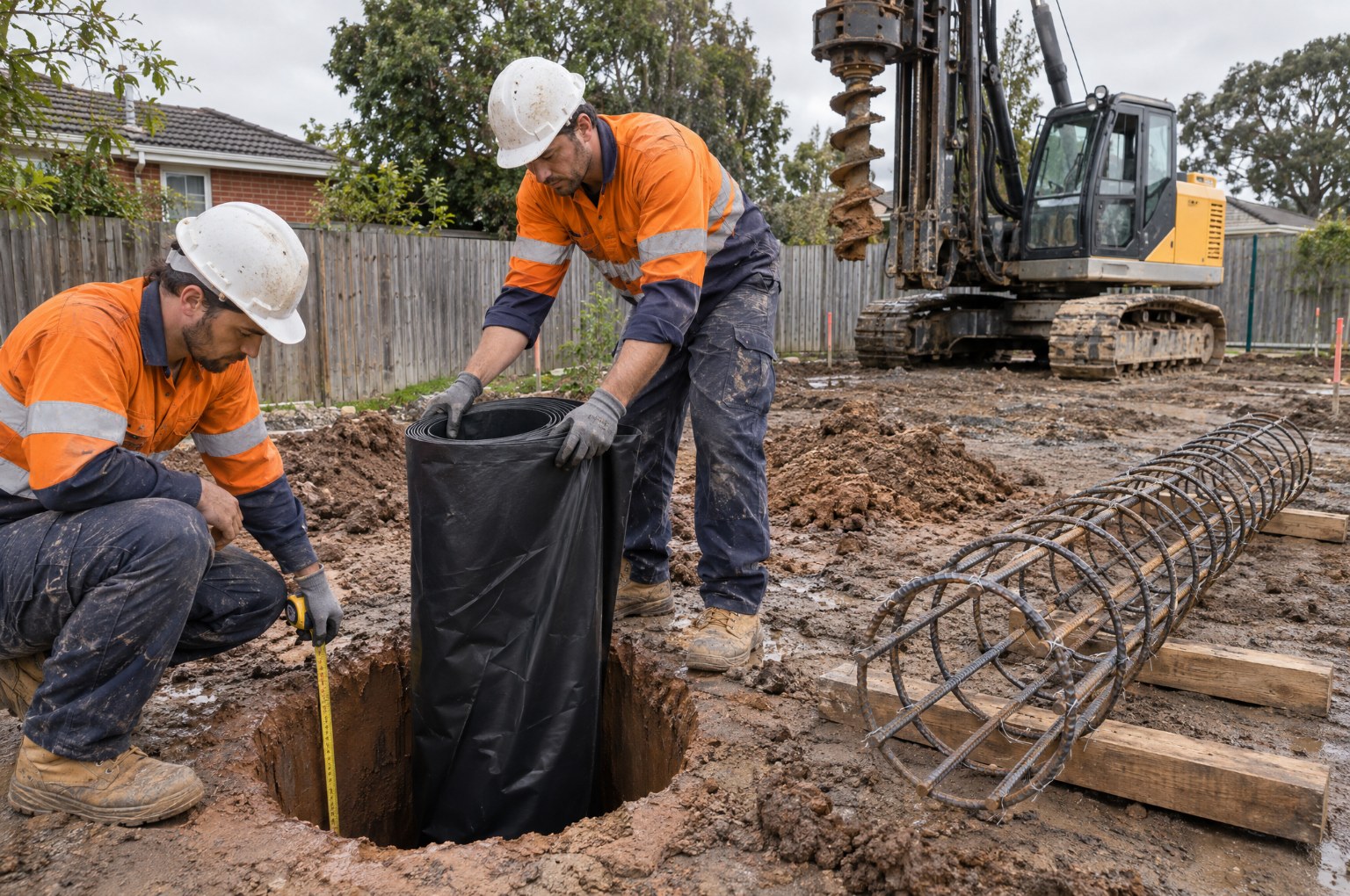
Pile debonding is the practice of breaking the grip between a pile or pier and the soil around part of its length, using a sleeve, wrap or slip coating. It is used where that soil will move relative to the pile: swelling clay that would lift it, or settling fill and soft ground that would drag it down.
Without debonding, those soil movements load the pile in ways it was not meant to carry. With it, the pile relies on the ground below the moving layer, where conditions are stable. This guide explains the two problems debonding solves, how engineers decide it is needed, and how it is built on site.
A pile normally gains part of its capacity from friction along its shaft, called skin or shaft friction. That friction works in the pile's favour only when the surrounding soil is stable. If a layer of soil moves, friction in that layer transfers the movement straight into the pile.
Debonding isolates the moving layer. A low-friction barrier lets the soil swell, shrink or settle without dragging the pile with it. The pile is then designed to get its capacity, and its resistance to uplift, from stable ground beneath that layer.
Melbourne's reactive clays swell when they get wet and shrink when they dry. The upper few metres, where moisture changes through the seasons, is often called the active zone.
When that clay swells, it grips the pier shaft and pushes upwards. A pier that is not deep enough, or not reinforced for tension, can be lifted, taking the beam or slab above with it.
AS 2870 covers deep footings and the swell pressure on pile-supported footings in its appendices.
Debonding the pier through the active zone reduces how much uplift reaches it. The pier is then anchored into stable clay or rock below. Our bored piers construction guide explains how piers are installed.
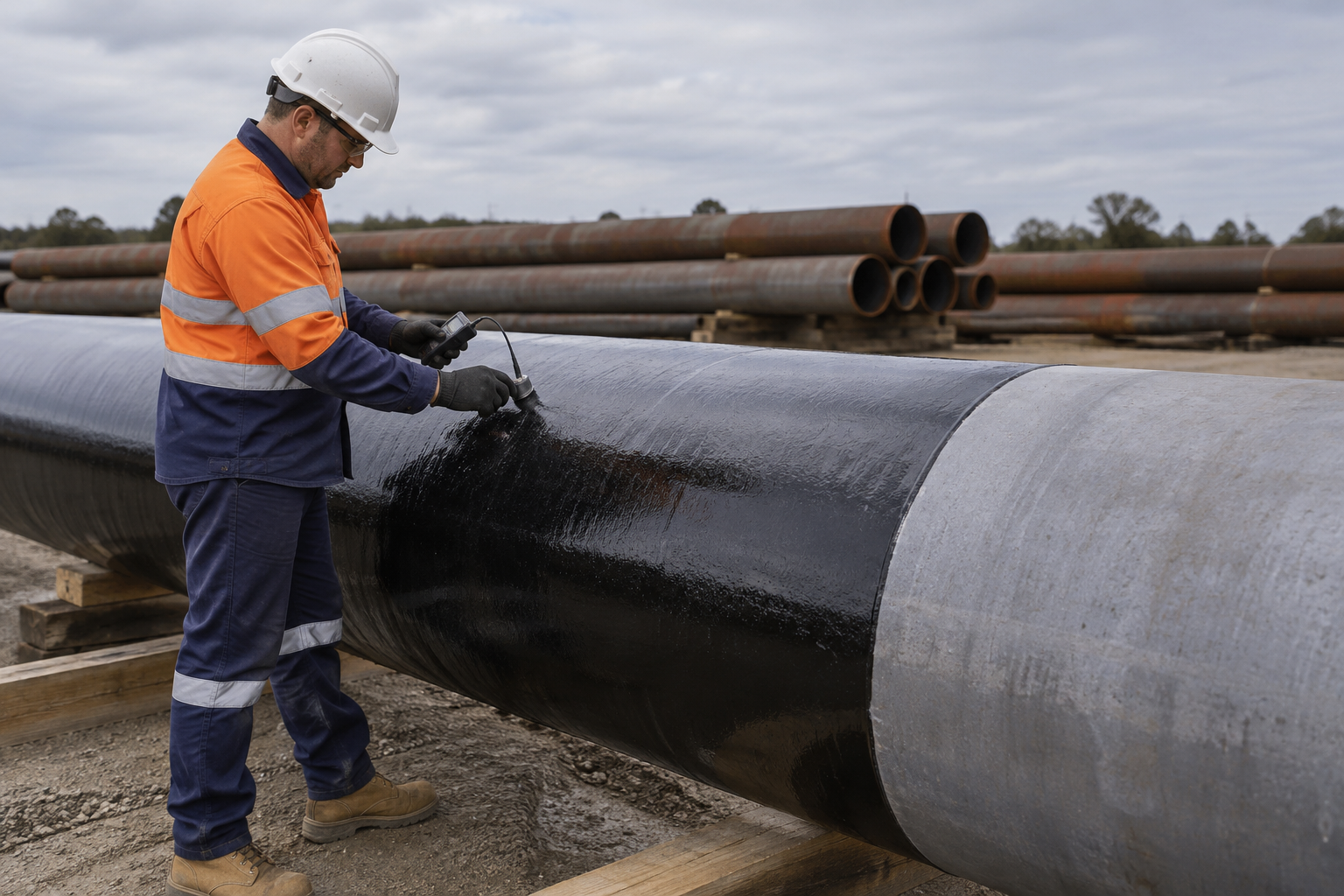
The reverse problem happens where the ground around a pile settles more than the pile does. Common causes are:
As the soil settles, it drags down on the pile. This is called negative skin friction or downdrag. It adds load the pile has to carry and can cause the pile itself to settle. Designers working to AS 2159, the piling standard, account for this extra load. Debonding the settling layer with a slip coating or sleeve is one way to reduce it.
Debonding is an engineering decision, made from the site investigation and the footing design. The table shows situations where it is commonly considered.
| Site Situation | Main Concern | Debonding Considered? |
|---|---|---|
| Highly or extremely reactive clay (H1, H2, E) with piers | Uplift from swelling clay | Often |
| Piers passing through deep uncontrolled fill | Downdrag as the fill settles | Often |
| Soft compressible clay or silt layers | Downdrag | Often |
| Sites with large trees nearby or removed | Extra shrink and swell in the active zone | Sometimes |
| Stable sand or rock (Class A) | Minimal soil movement | Rarely |
| Moderately reactive clay with shallow footings | Movement handled by slab stiffness | Rarely |
The alternative to debonding is often simply a deeper, more heavily reinforced pier that can resist the uplift or downdrag. Engineers compare both options on cost and buildability.
The design follows the site investigation in a logical sequence.
| Method | How It Works | Typical Use |
|---|---|---|
| Plastic sleeve or wrap | Polyethylene sheet or tube placed around the upper shaft creates a slip surface | Bored piers in reactive clay |
| Proprietary pier sleeves | Prefabricated sleeves sized to the pier diameter | Repetitive residential piers |
| Bitumen slip coating | A thick bitumen layer on the shaft shears instead of the soil gripping the pile | Precast and steel driven piles through settling fill |
| Oversized casing with soft infill | A larger casing leaves an annulus filled with weak material | Specialist or heavy-load situations |
| Void formers under beams | Compressible formers below ground beams stop swelling clay pushing up on the beam | Beams spanning between piers on reactive clay |
The engineer specifies the method. Substituting a different product on site without approval can change how the pile performs.
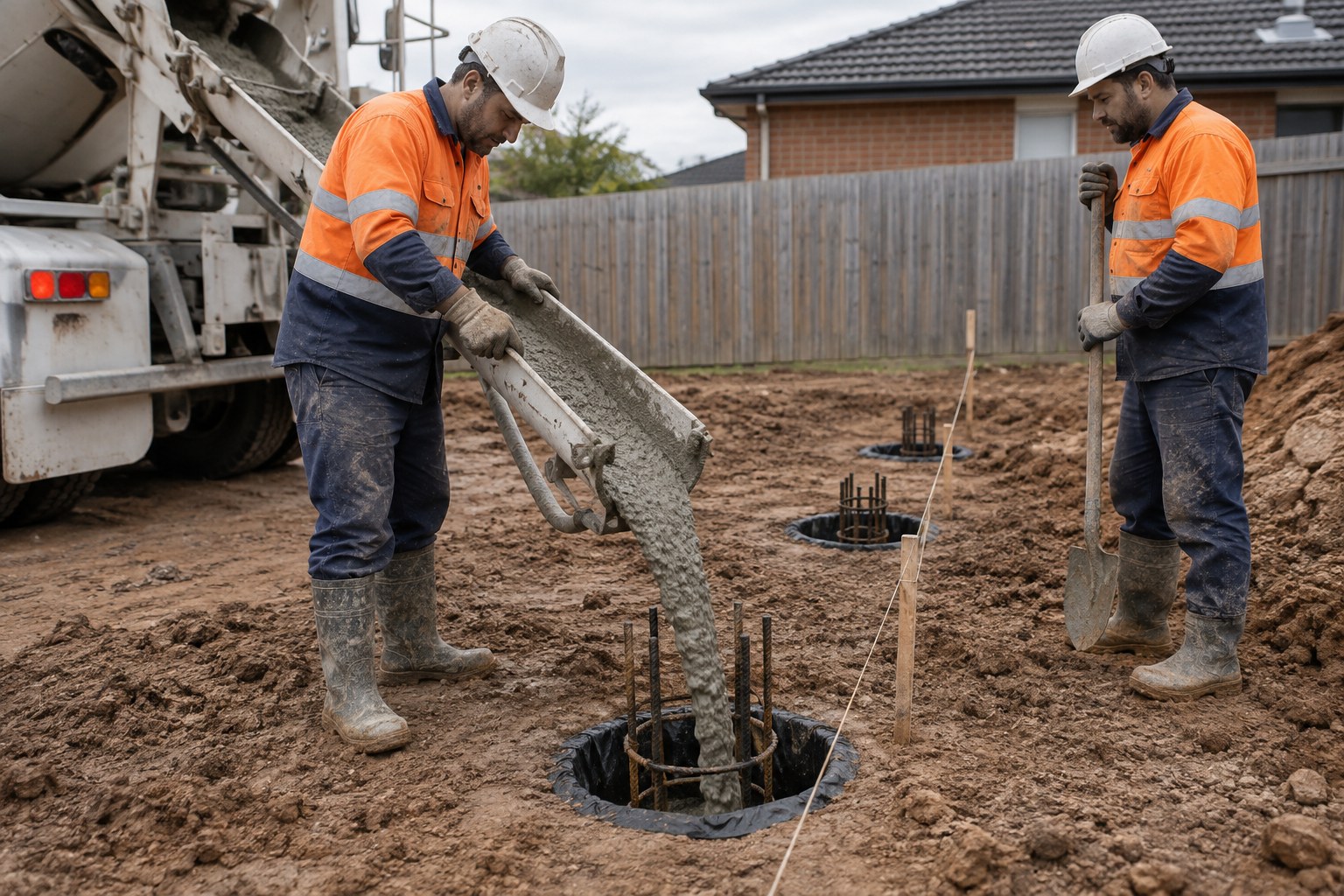
For a typical sleeved bored pier, the sequence is:
Our article comparing piling and bored piers explains when each pile type is used.
Sleeving is one method of debonding. Debonding is the general aim of reducing friction between a pile and moving soil, and it can be achieved with sleeves, wraps, bitumen coatings or casings.
No. Many piers in reactive clay are simply designed deep enough and reinforced to resist uplift. Debonding is one option the engineer considers, usually on highly or extremely reactive sites or where fill is present.
Negative skin friction, or downdrag, is the downward drag on a pile when the surrounding soil settles more than the pile. It adds load to the pile and is common where piles pass through new fill or soft compressible ground.
Generally not in any practical way, because the pier is already cast against the soil. Problems with existing piers are usually addressed by investigation and, where necessary, new or supplementary footings designed by an engineer.
The structural or geotechnical engineer decides, based on the site investigation, the site classification and the loads. The contractor installs the debonding exactly as detailed on the drawings.
Pile debonding solves a specific problem: soil that moves relative to the pile. When the engineer specifies it, the detail matters as much as the concrete.
Urban Pour installs piling and bored piers across Melbourne to engineering design. Contact Urban Pour with your drawings and soil report to discuss your footings.
What pile debonding is, why piers in reactive clay or settling fill need it, and how sleeves and coatings are installed.
See more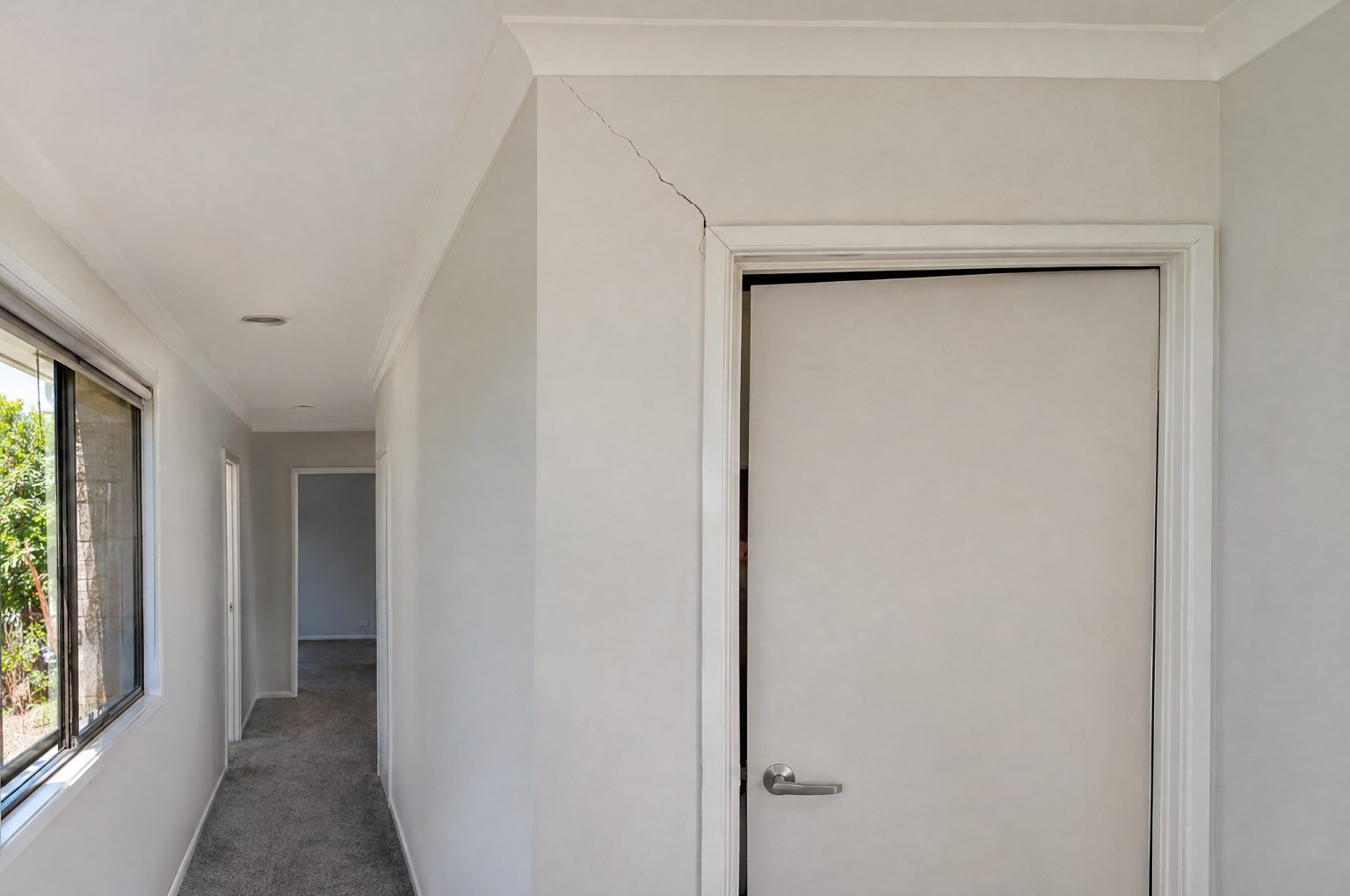
What causes slab heave on Melbourne's reactive clay, the early signs to watch for, and how to prevent and repair it.
See more
What each AS 2870 site class means, how a soil test sets the class, and how it changes your slab and footings.
See more