
Melbourne’s Leading Concrete Pouring Specialists
Oops! Something went wrong while submitting the form.
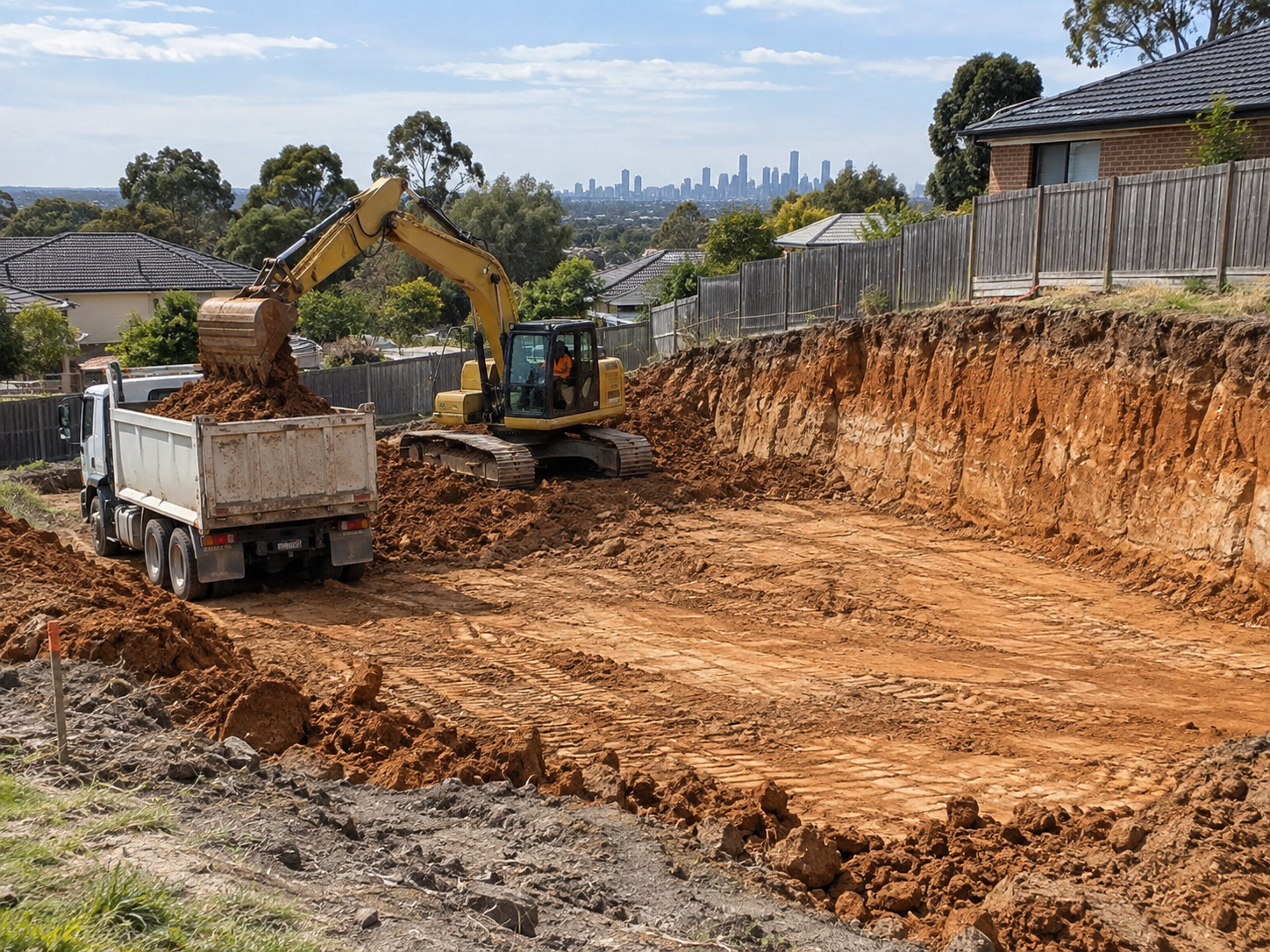
Builders use the two terms as if they are interchangeable. They are not. A site cut is the result you are paying for. Benching is one of the methods used to get there safely when the ground will not stand up on its own.
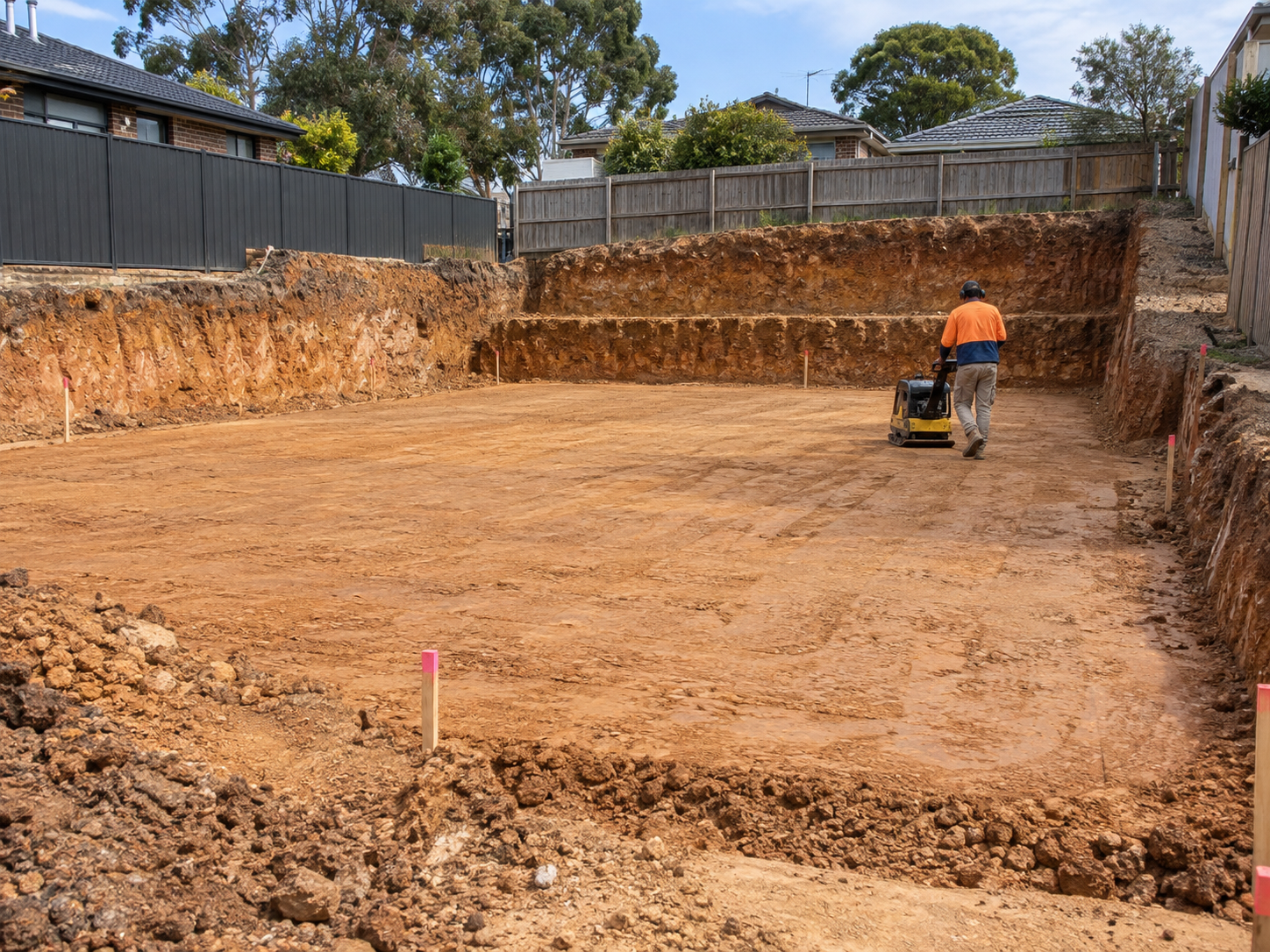
A site cut is the excavation of a sloping or uneven block down to a level, compacted building pad at a set reduced level, ready for footings or a slab. Topsoil is stripped, material is cut to the engineer's levels, the subgrade is compacted, and the spoil is carted off site.
This guide separates the two properly, then covers the Victorian rules that catch Melbourne builders out.
A site cut is an outcome, not a technique. The deliverable is a flat, stable platform at a nominated reduced level, within the engineer's tolerance.
Reduced level is the surveyed height the pad is cut to, measured against a fixed datum rather than existing ground. Get it wrong and you are out on every footing depth, step, finished floor level and drainage fall on the block.
A completed site cut normally includes:
On a flat block in sand that is straightforward earthworks. On a sloping block in reactive clay, which describes much of Melbourne's north and east, the cut face becomes the problem.
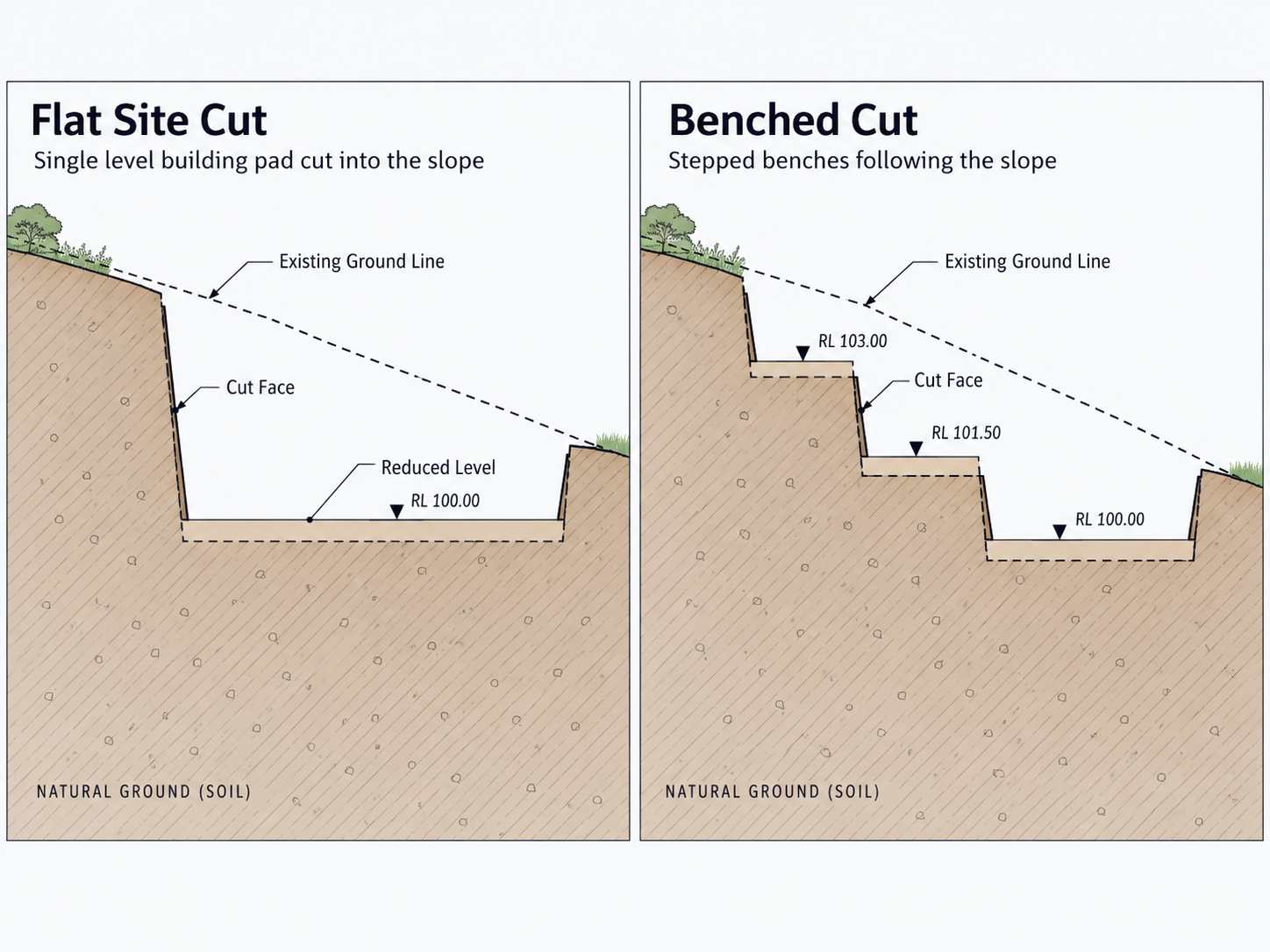
Benching is a method. Instead of leaving one tall face where the cut meets higher ground, the excavation is stepped down in horizontal platforms so no single face carries its full height. It suits slopes, deep cuts and soils that will not hold a clean face.
It is also a safety control, not a shaping preference. WorkSafe Victoria's compliance code for excavation, published 19 December 2019, deals with reducing the risk of ground collapse, and benching and battering sit there alongside shoring as recognised ways of doing it.
So the two are not peers. A site cut is what you end up with. Benching is one of the ways you get there and keep the face standing while you do. You can cut a site with no benching at all, and you can bench an excavation that produces no building pad.
For the benching side in depth, we have covered how site benching works on Melbourne blocks, and the difference between benching and grading is a different comparison again.
Duration is governed by the block, not a standard programme. Volume, access, ground conditions, rock, service relocations and cartage distance all move it. Soil classification under AS 2870 and the geotechnical report tell you most of this before a machine arrives.
Straight cut when:
Bench when:
Temporary and permanent works are separate questions. Benching holds ground during construction; if the level change is staying, you still need retaining designed for it. Getting that sequencing wrong is one of the benching mistakes that cost builders money.
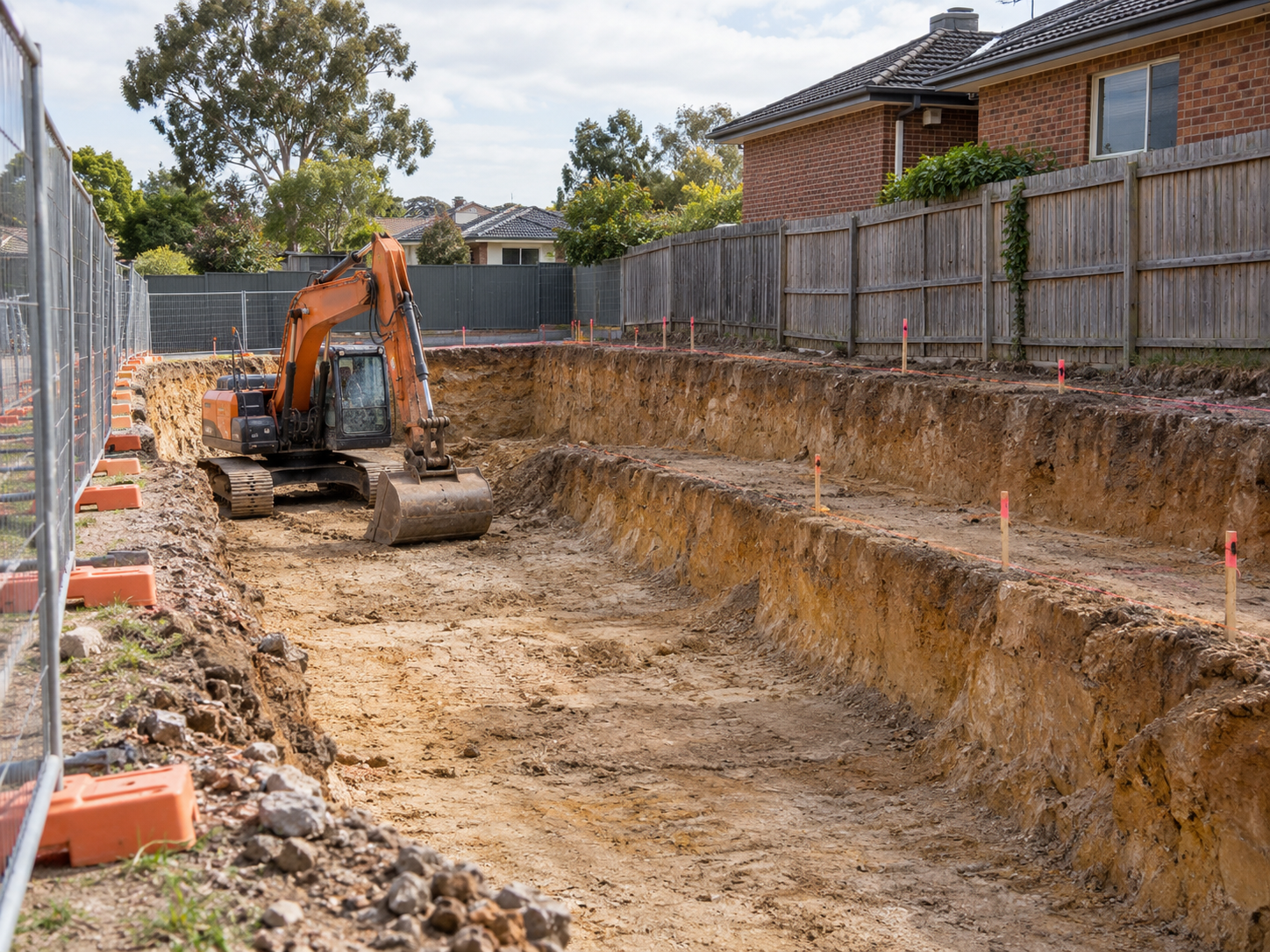
Ground collapse is the hazard that defines this work. Safe Work Australia's model code puts it plainly: excavation collapses are dangerous and can happen quickly, which makes escape difficult. In Victoria the operative document is the WorkSafe compliance code, covering benching, battering and shoring as controls for reducing the risk of ground collapse. Choosing between them is an engineering decision, not a site preference.
The moment a cut approaches an adjoining property, the protection work regime applies. Protection work obligations for adjoining properties include underpinning of footings and shoring up, and the process has hard edges. The owner must serve notice on the adjoining owner, who has 14 days to respond or is deemed to have agreed. A condition survey must be prepared and signed as an agreed record. Insurance must cover the adjoining property, occupiers and the public for 12 months following completion. And a building permit may not be issued until the protection work process is completed to the approval of the building surveyor.
Excavated soil is regulated material, not spare dirt. Under Victorian environment law, waste soil must be classified before it is transported. N120 is contaminated soil and is reportable priority waste. N122 is fill material, is not priority waste, and needs no permission to transport and no tracking. N123 is acid-sulfate soil and is priority waste. Soil sourced from contaminated land that is industrial waste must be classified as soon as practicable, and reportable priority waste soil must be tracked in Waste Tracker whenever it changes hands.
Two identical cuts on two identical blocks can land very differently, purely on what the soil turns out to be. If earthworks start next month, settle this first.
No honest figure exists without a site inspection. Here is what moves it:
Have these in hand before earthworks start:
Urban Pour is a Melbourne concrete contractor offering site benching and excavation alongside its concrete work, covering bulk earthmoving, detailed excavation for foundations, trenches and basements, underground structures, soil compaction and stabilisation, and rock removal.
Got a block that will not sit flat, or a cut heading towards a boundary? Talk to Urban Pour about your site and get the levels, ground support and spoil sorted before the machines turn up.
A site cut is the excavation of a block down to a level, compacted building pad at a set reduced level. Topsoil is stripped, material cut to the engineer's levels, the subgrade compacted and the spoil carted away, ready for footings.
A site cut is the outcome, a level pad at a nominated reduced level. Benching is one method of achieving and supporting that cut, stepping the excavation down so no single face carries its full height. It is also a recognised ground collapse control in Victoria.
It depends on the block, not a standard programme. Cut volume, site access, ground conditions, rock, service relocations and cartage distance all change the duration. A geotechnical report and accurate levels before you start are the best predictor of a clean run.
A site cut is usually carried out under the building permit for the work it prepares for, rather than a standalone earthworks permit. Where the cut approaches an adjoining property, the protection work process must be completed to the building surveyor's approval before a permit may be issued.
There is no meaningful figure without a site inspection. Cost is driven by cut volume, ground conditions, spoil classification and disposal, access and plant size, whether benching or retaining is needed, and whether detailed excavation is included. Spoil is usually the largest variable.
It is classified before transport. Fill material coded N122 is not priority waste and needs no tracking. Contaminated soil coded N120 is reportable priority waste, and acid-sulfate soil coded N123 is priority waste. Reportable priority waste soil must be tracked in Waste Tracker whenever it changes hands.
Often, yes. Benching and battering hold ground during construction, but they are temporary works. Where the cut creates a permanent level change the ground cannot hold at its natural angle, engineered retaining is required. Your engineer decides on cut height, soil and surcharge above the face.
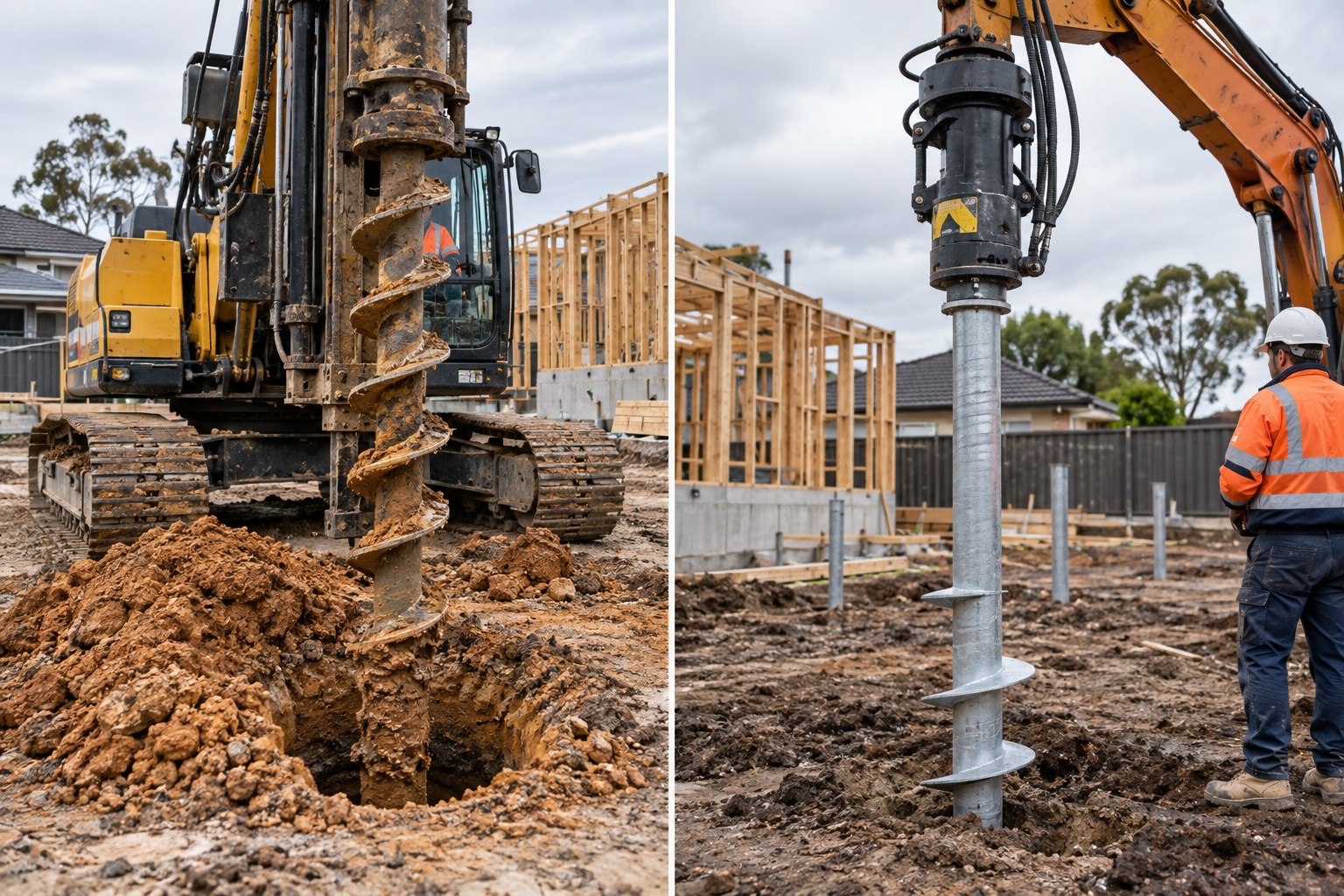
Compare bored piers and screw piles for Melbourne sites, including load, soil, access, spoil, cost drivers and programme.
See more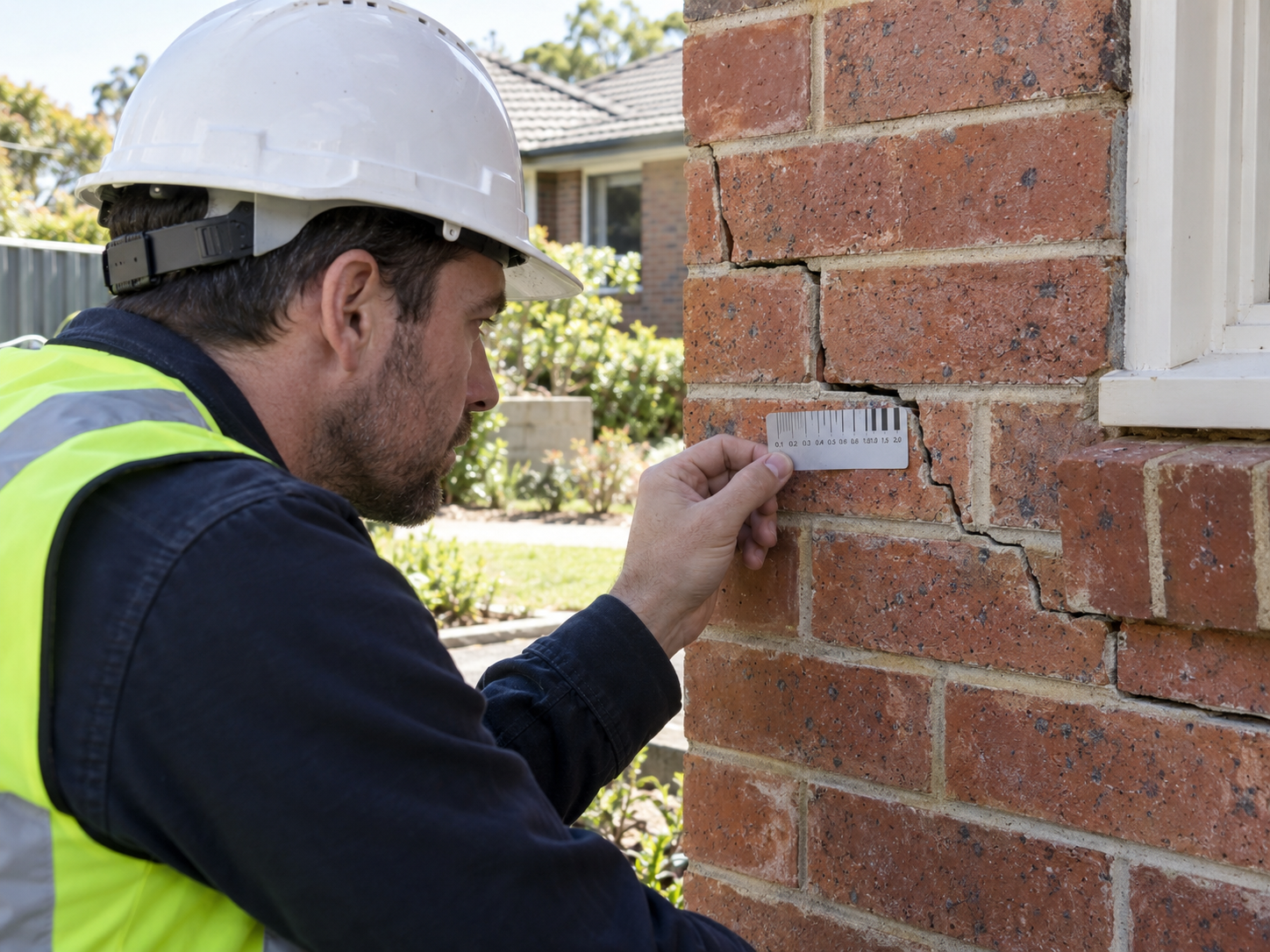
Learn when house underpinning is actually needed, what foundation cracks mean, and when movement should be assessed by an engineer.
See more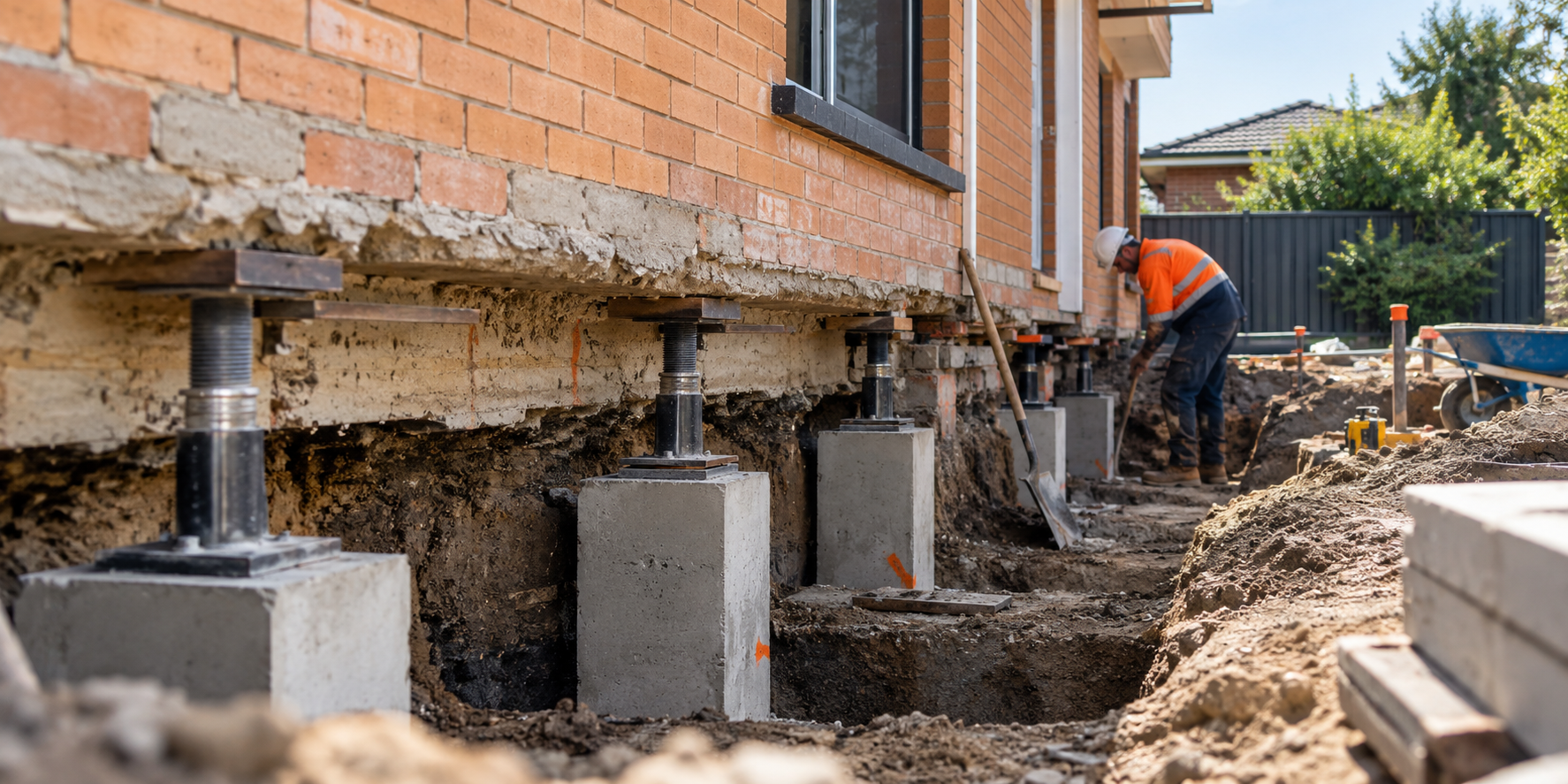
Underpinning costs vary by pier count, depth, soil conditions, access, engineering and the method required for the site.
See more