
Melbourne’s Leading Concrete Pouring Specialists
Oops! Something went wrong while submitting the form.
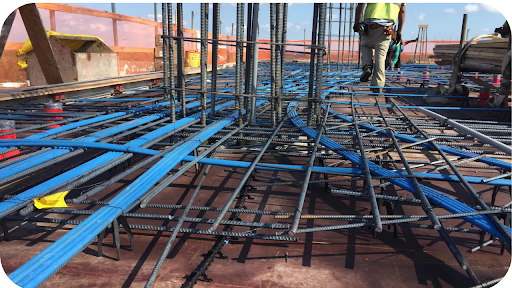
Multi-level homes place greater stress on concrete floors and foundations, making traditional slab systems prone to cracking, deflection, and long-term movement.
When these issues arise, homeowners often face uneven floors, structural repairs, or costly design limitations, especially in tight urban blocks where height, weight, and layout efficiency are crucial.
Post-tensioning offers a smarter, more resilient structural approach, allowing thinner slabs, wider open spaces, and exceptional long-term performance ideal for today’s compact multi-level Australian homes.
Post-tensioning is a structural method that strengthens concrete by placing high-strength steel cables called tendons inside the slab, then tightening them once the concrete hardens. When the tendons are stressed, they compress the concrete, making it significantly stronger, more flexible, and far more resistant to cracking.
This process allows concrete slabs to span longer distances, carry heavier loads, and remain thinner than conventional reinforced slabs.
In multi-level homes, post-tensioning provides the structural performance required for open-plan layouts, upper-floor stability, and modern architectural design.
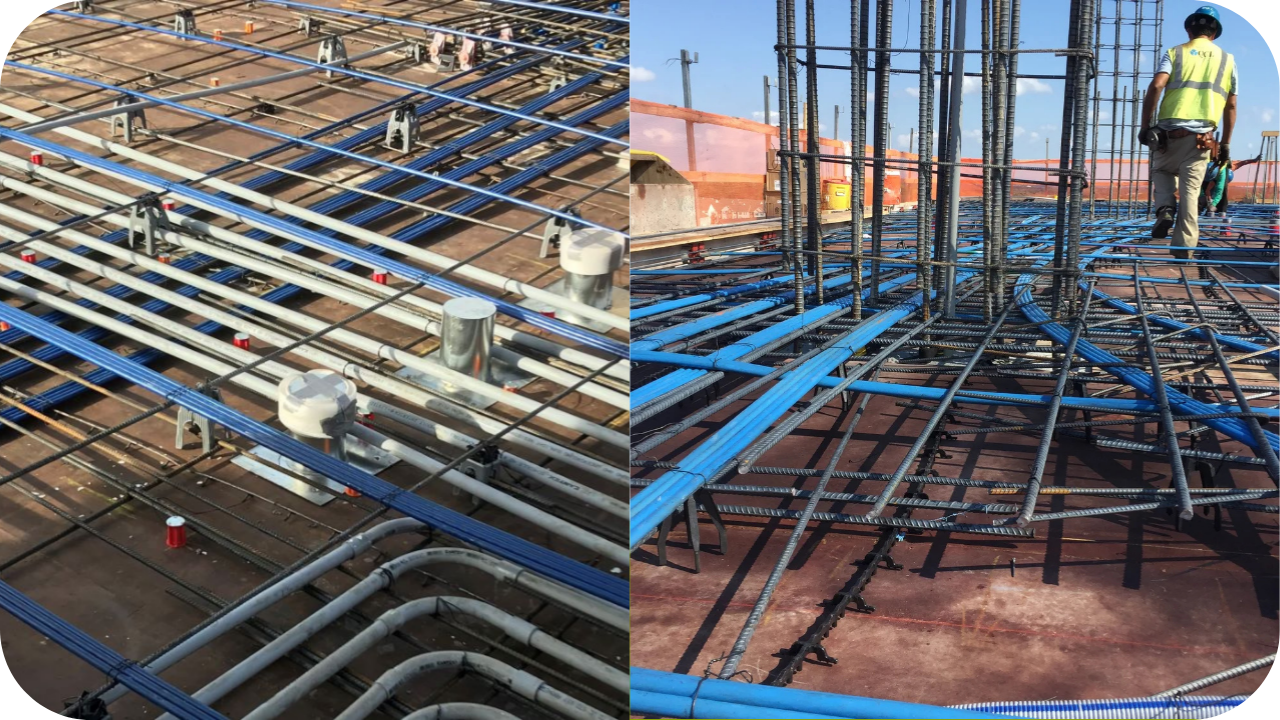
Modern multi-level homes demand structural systems that stay strong, flexible, and space-efficient. Post-tensioning offers several approaches, each tailored to different design needs. Here’s how the main systems compare.
Unbonded post-tensioning uses individual steel tendons coated in grease and encased in plastic sheathing, allowing them to move slightly within the slab. This flexibility makes it well-suited to residential builds where lighter slabs, fast installation, and fewer support beams are preferred.
It offers excellent crack control, efficient load transfer, and cost-effective construction, which is why it remains the most popular PT system for multi-level homes.
Bonded post-tensioning places steel tendons inside ducts that are filled with grout after stressing, forming a permanent bond between the tendon and the surrounding concrete. This method provides higher structural capacity, improved crack resistance, and enhanced long-term durability.
It is typically used in areas where heavy loads are expected or where additional stiffness is needed. Although more complex and demanding during construction, it delivers exceptional strength and reliability for demanding residential applications.
Post-tensioning is commonly integrated into suspended slabs, transfer slabs, beams, and floor systems that require thinner profiles without compromising strength.
In multi-level homes, PT is often used in upper-floor slabs, garage decks, and cantilevered sections to achieve larger open spaces and reduce support columns.
Its adaptability allows architects to incorporate complex layouts, longer spans, and modern design features while still maintaining safe, compliant structural performance.
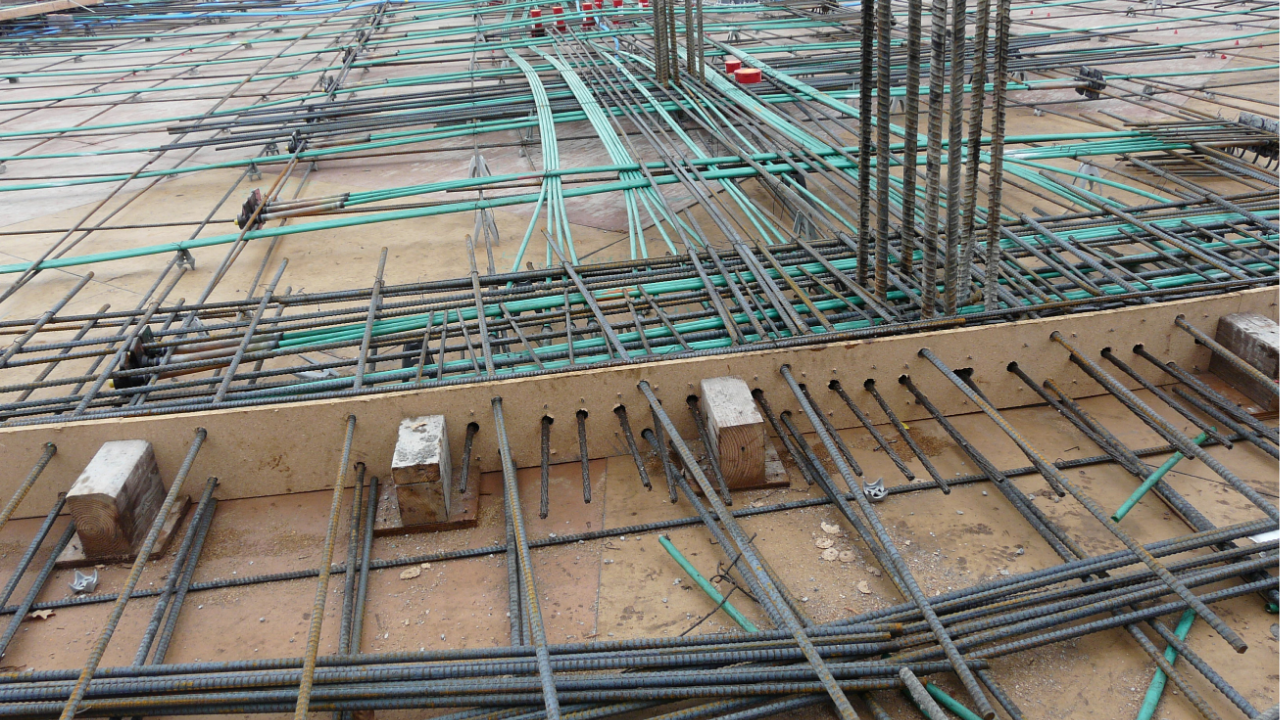
Here are the reasons PT systems have become a preferred structural choice for modern multi-level homes.
Post-tensioning increases the strength of concrete, allowing engineers to design thinner slabs without compromising performance.
This reduces overall dead load, helps control deflection, and enables lighter structural systems. For multi-level homes, it delivers a more efficient build with less material usage while maintaining the rigidity needed for long-term stability.
PT slabs can span further without needing closely spaced supporting beams or columns. This opens up living areas, creates flexible floor plans, and supports modern architectural concepts such as open-plan kitchens, expansive lounges, and seamless indoor-outdoor transitions.
Multi-level homes benefit greatly from this freedom, avoiding obstructive structural elements while maintaining strong load-carrying performance.
By actively compressing the concrete, post-tensioning helps keep slabs in compression under day-to-day loads. This significantly reduces shrinkage cracking and minimises long-term deterioration.
The result is a more stable structure with fewer maintenance issues over time, making PT slabs ideal for multi-level homes exposed to movement, vibrations, and changing environmental conditions.
PT slabs achieve strength with less thickness, allowing designers to reduce the distance between floors without sacrificing structural integrity.
This becomes especially valuable in areas with strict height limits or when homeowners want to maximise internal space. Multi-level homes can fit more usable levels within the same overall building height, improving both practicality and value.
Post-tensioning streamlines construction because slabs require less steel reinforcement and can be stressed early once the concrete cures. This accelerates formwork removal and allows trades to move onto the next level sooner.
Faster cycle times reduce delays and labour costs, making PT an efficient choice for multi-level residential projects where timelines are often tight.
PT slabs distribute loads more evenly across the structure, improving how forces travel through columns and walls. This efficiency reduces the risk of overstressing localised areas and enhances the building’s overall performance under everyday and long-term loads.
For taller homes, the improved load path helps ensure settlement is controlled and structural movement remains predictable.
With built-in compression and higher structural resilience, PT systems respond better to ground movement, soil shifts, and seismic activity. Tendons help control cracking, increase ductility, and maintain slab integrity under stress.
For multi-level homes in areas with reactive soils or vibration-prone environments, post-tensioning provides an added layer of structural security.
Post-tensioning allows for creative slab shapes, cantilevers, and long unsupported edges that traditional reinforcement struggles to handle efficiently.
This flexibility supports bold residential designs from sweeping upper-level balconies to curved floor plates and dramatic overhangs. Homeowners and architects gain greater design freedom while maintaining the strength needed for safe multi-level construction.
Behind every post-tensioned slab is careful engineering work that ensures the system performs safely across the entire life of a multi-level home. Here’s what matters most from a structural perspective.
Post-tensioned residential floors require precise tendon layout, correct slab thickness, and accurate load calculations to ensure the structure performs as intended. Engineers assess span lengths, column positioning, soil conditions, and long-term stresses to create a balanced design.
Proper detailing minimises deflection, improves durability, and ensures the slab maintains the required compression levels for safe and efficient performance.
Because multi-level homes are built floor by floor, each stage affects how loads are distributed. Post-tensioning introduces temporary stresses that flow through supporting walls and columns as slabs cure.
Engineers must account for these “staged construction effects” to prevent unwanted movement, stress build-ups, or reduced precompression in upper slabs. Correct sequencing ensures each level performs safely during and after construction.
Issues arise when tendons are poorly placed, slab depth is underestimated, or construction loads are overlooked. Engineers avoid these pitfalls by modelling the entire structure, not just individual floors, to understand how forces interact between levels.
This reduces risks like slab cracking, inadequate precompression, or complications during future modifications. Clear communication between engineers, builders, and PT specialists ensures reliable long-term performance.

Urban Pour brings a specialist approach to post-tensioned slab construction, combining engineering precision with practical on-site experience. Our team works closely with structural engineers to ensure every tendon layout, stress profile, and concrete specification is executed exactly as designed.
We use high-quality materials, advanced installation methods, and strict quality controls to deliver slabs that perform reliably across multi-level homes. From initial planning to final pour, we prioritise safety, efficiency, and long-term durability so your structure remains stable, resilient, and compliant for decades.
Post-tensioning gives multi-level homes the strength, efficiency, and long-term performance modern living demands. When designed and poured correctly, it creates a foundation that supports larger spaces, slimmer floors, and greater architectural freedom.
If you want a solution built for durability, safety, and seamless construction, Urban Pour is ready to help. Speak to us today and get expert guidance for your post-tensioned residential build.
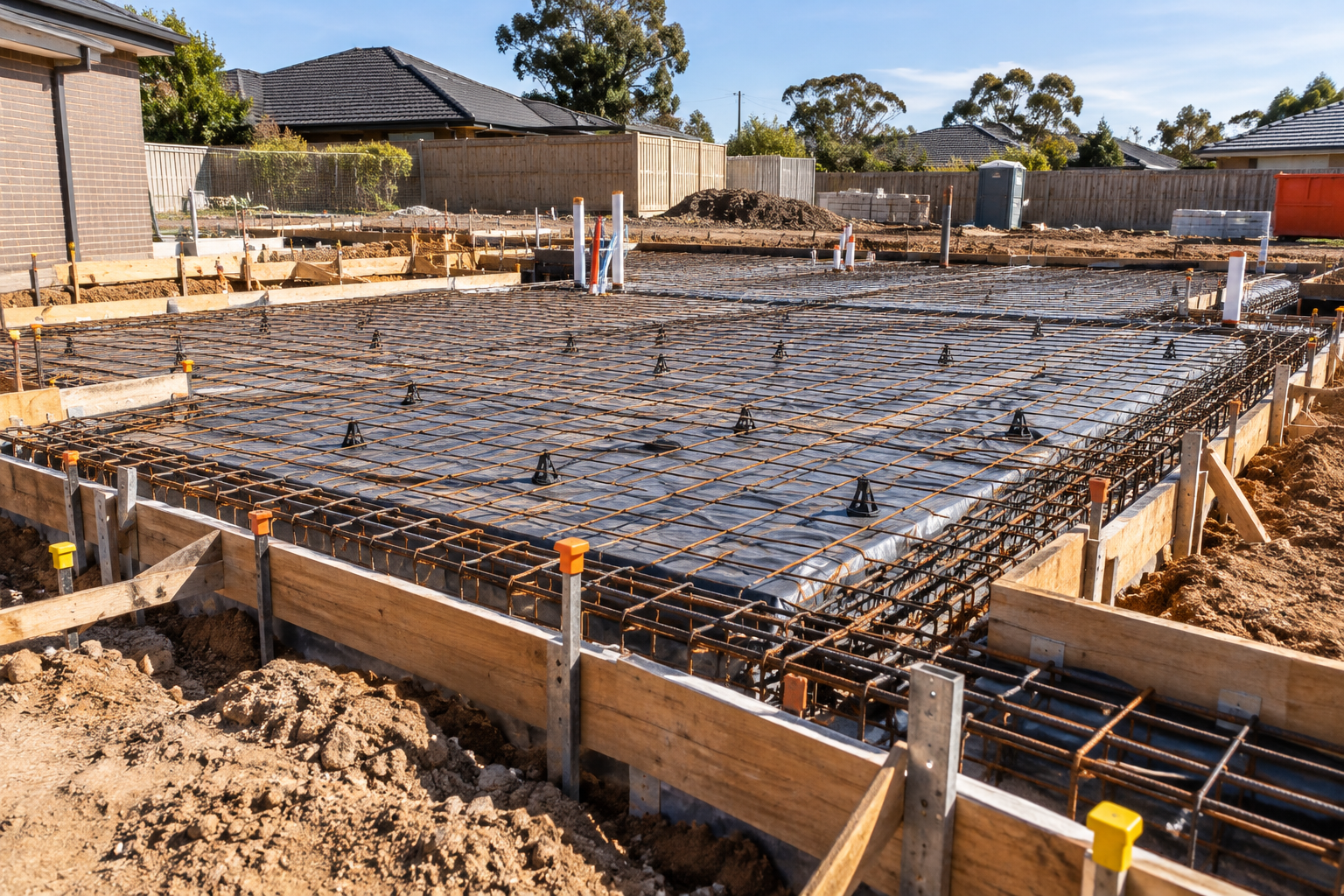
Learn how concrete slabs are designed and built in Australia, including slab types, site classification, reinforcement, pouring, curing and the standards that govern each stage.
See more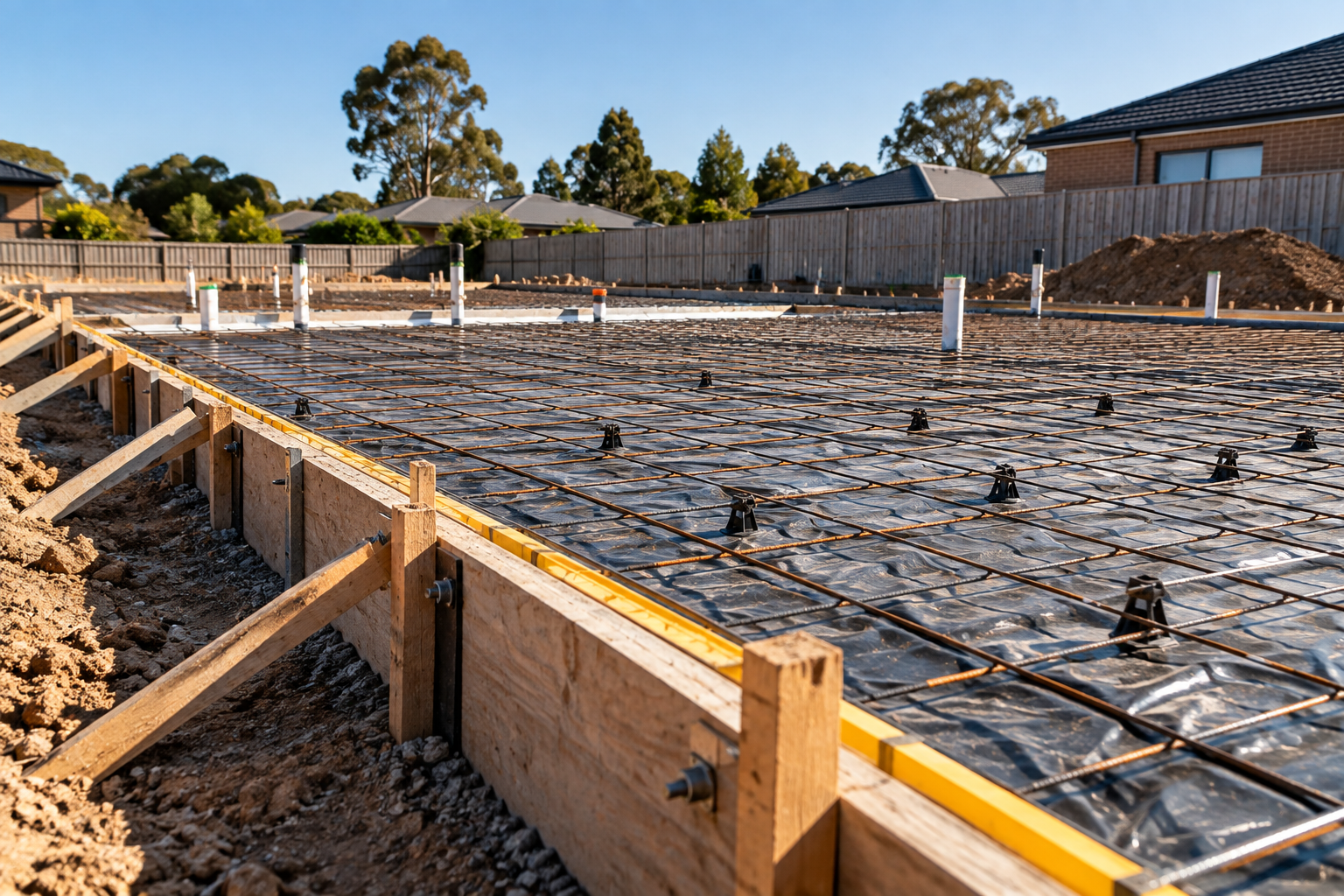
Calculate concrete slab volume in cubic metres, then account for beams, thickenings, waffle pods, subgrade tolerance and pump losses before ordering.
See more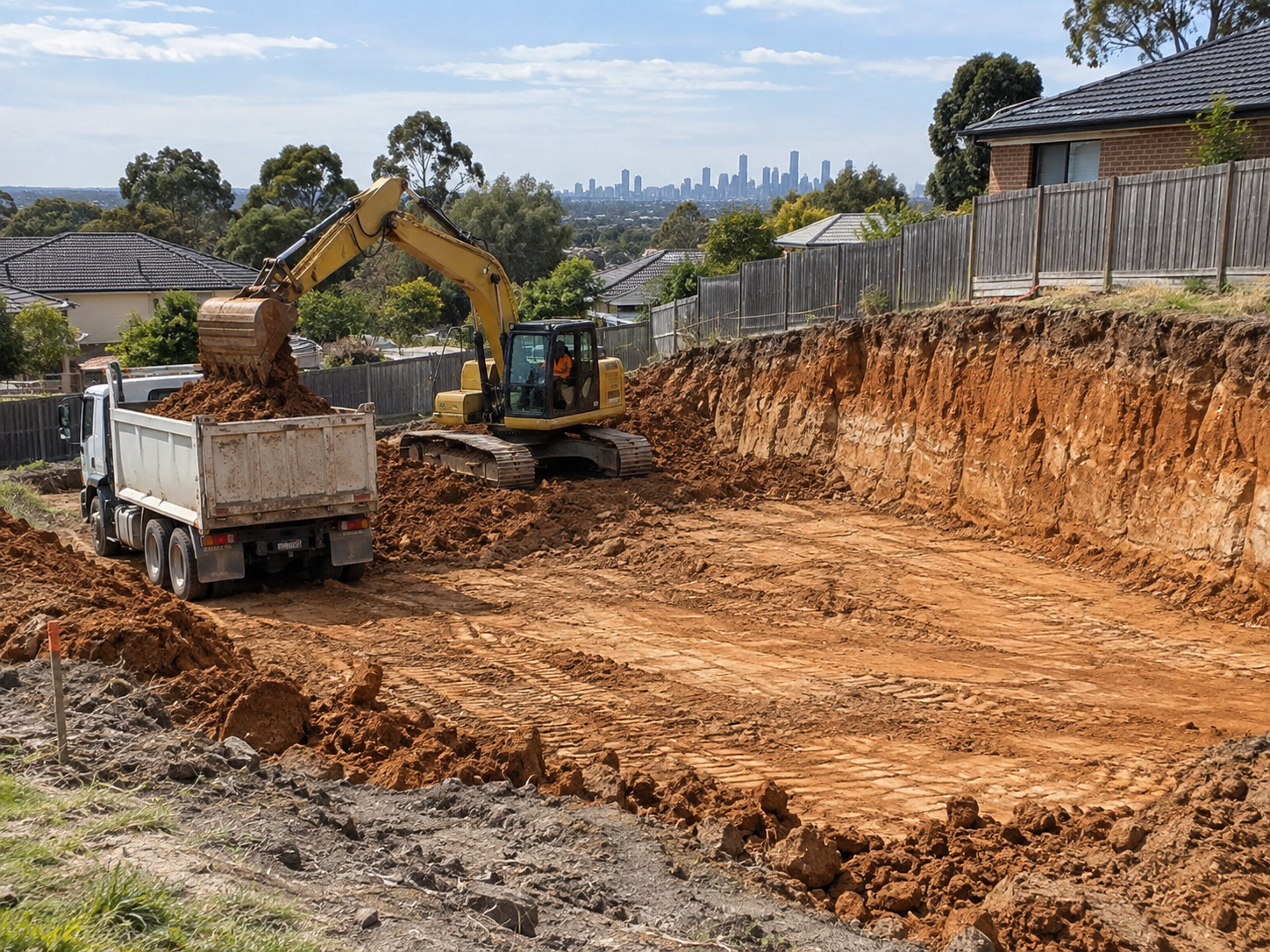
Site cut vs site benching explained for Melbourne builders, including excavation methods, safety requirements, ground conditions and what to check before earthworks begin.
See more